
Compare Three Greene County Property Value Numbers
Start with the Greene County Delta appraisal search for assessment data. A Chancery instrument adds sale terms. The county parcel layer contributes cross-reference fields. Greene County property records label each number differently. Read the label and the year before comparing any two of them.
| Value | What It Is | Where |
|---|---|---|
| True or market value | Assessor's mass-appraisal estimate before the class ratio | Assessment record |
| Assessed value | True value multiplied by Mississippi's class ratio | Assessment and tax record |
| Sale or consideration | Amount or consideration tied to a recorded transfer, when populated | Deed/index and GIS sale fields |
| Land and improvements | Components that may explain the total estimate | Assessor record when shown |
Mississippi runs a simple formula. True value multiplied by the class ratio yields assessed value, and assessed value multiplied by millage yields tax before adjustments. That is why the assessed figure never equals a likely sale price.
Mississippi Ratios Shape Greene County Assessed Value
The Mississippi Department of Revenue appraisal guidance sorts property into five classes. Class I owner-occupied residential real property is assessed at 10 percent of true value. Class II, other real property, sits at 15 percent. Class III personal property is also 15 percent. Class IV public-service property and Class V motor vehicles are each assessed at 30 percent.
Always confirm the classification on the parcel. Applying the owner-occupied rate to other real property will understate the assessed value. That value lives in Greene County property records. Homestead status can shift the tax result. But it never turns the assessed figure into a market appraisal.
Greene County Value Fields Need a Date and Source
The county GIS parcel layer carries sale date, book, page, assessment, and value field families. It also holds parcel and owner data. Those fields are handy cross-references. They are not the recorded deed, nor a same-day assessor certification.
The GIS landing page lists an effective year of 2026. Greene County publishes no city-specific value trend. The county's last revaluation year is not stated there. State guidance calls for reappraisal at least every four years. But that rule does not tell you when a particular parcel was last inspected.
Note: An effective map year describes the dataset context. It should not be reported as Greene County's last revaluation year.
Look Up a Greene County Property Value by Parcel
Search by address first in the Delta appraisal interface. Once the right tract appears, save the PPIN or parcel number. That key unlocks the rest of the property search.
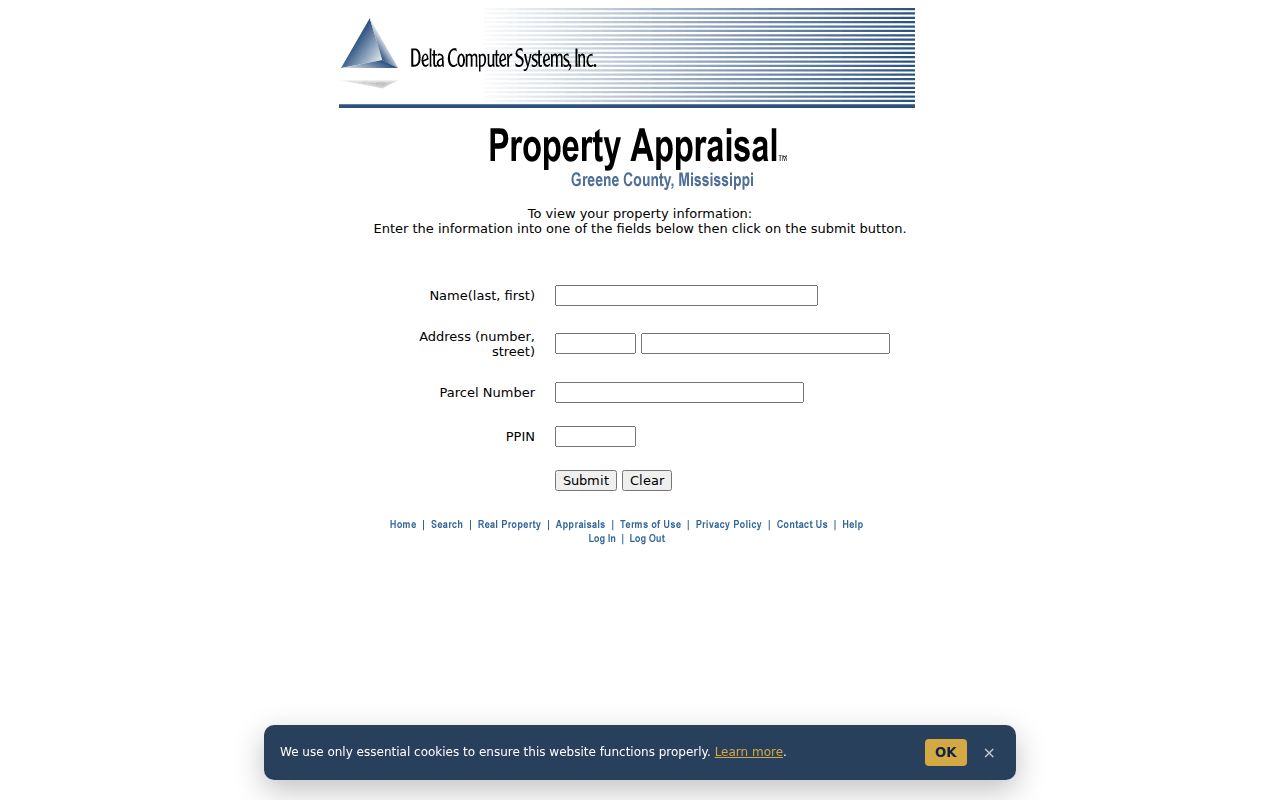
The official form offers owner, address, parcel, and PPIN routes. The parcel number is the firmer bridge. It links appraisal, tax, GIS, and deed records for the same Greene County tract.
- Enter the owner, address, parcel, or PPIN in Delta and select the matching property.
- Record the true/market and assessed figures, class, tax year, and land/improvement split if populated.
- Use book/page or owner data to locate the relevant conveyance in Chancery records.
- Compare dates and transaction type before treating consideration as an open-market sale.
- Assessed value
- The class-adjusted value used in the tax calculation.
- True or market value
- The assessor's full-value mass-appraisal estimate.
- Assessment ratio
- The statutory percentage applied to true value for a property class.
- Consideration
- A deed field that may not equal an arm's-length market price.
Recorded Greene County Sale Data Can Be Incomplete
The Chancery search includes a consideration-value field. The GIS layer carries SALEDT, BOOK, PAGE, and SALES_INST fields. A blank value proves nothing. Family transfers, gifts, estate distributions, and partial interests may not provide a useful market comparison. When a transaction matters, open the recorded deed image. Match its legal description to the parcel. The online land-record page states that the courthouse index, not the website, is official.
Why Greene County Tax Value and Sale Price Diverge
Timing drives much of the gap. A deed can be recorded after the tax roll was prepared. Classification adds another layer. The statutory ratio deliberately makes assessed value a fraction of true value. Exemptions may alter the tax outcome. A sale can carry unusual terms or cover only part of an interest.
For tax bills, exemption administration, and appeal steps, use the dedicated property-tax record. Do not infer those matters from one value field. Keep each number in its proper role.
Greene County Reassessment and Roll Dates Matter
The county calendar sets July 15 for roll inspection and the first Monday in August for presenting a valuation objection to the Board of Supervisors. Those dates govern the assessment process. They do not predict a sale price.
Homestead materials use January 1 occupancy and an April 1 filing deadline, and that status can affect tax treatment. Trust the year displayed on the record. If a figure changes without explanation, ask the Tax Assessor instead of carrying an old number forward.
Greene County City Trends Were Not Verified
Leakesville, State Line, and McLain publish no official city-specific appreciation series. The 2026 GIS effective year is countywide context. It is not evidence of a price trend or a city revaluation result.
A defensible local comparison needs like property classes, similar dates, and verified transfers. Greene County deed records supply the raw references. Selecting and adjusting comparable sales takes appraisal judgment.
What a Greene County Property Value Does Not Prove
An assessor figure exists for public taxation through mass appraisal. It cannot account for every condition or repair. Private sale terms and current buyer response are also beyond its reach. A deed's consideration is historical transaction data. A GIS value field is a convenient copy of public data. No single Greene County property records figure establishes current market value on its own.
Value is not price. Greene County assessed value is a tax figure, not what the property will sell for and not a parcel-specific appraisal.